Increased Character Limits for Letter Template Names
This enhancement increases the character limit for letter template names in the CureMD application. Users can now enter up to 60 characters when creating a new letter template.
This enhancement enables clinicians to document and manage Social Determinants of Health (SDOH) goals alongside General and Priority goals. It introduces structured goal entry, progress tracking, and management of barriers and interventions. SDOH goals are now available in both Clinical > Care Plan and Provider Note > Care Plan, with the Provider Note (SOAP) output displaying SDOH goals consistently with Desired Outcomes, Priority Goals, and General Goals.
This enhancement standardizes the display of height and weight across both SOAP Vitals and Note Templates, showing measurements in dual units (primary and secondary). The display automatically aligns with the site’s configured unit preference (e.g., metric or imperial), ensuring consistent and accurate documentation across the UI, PDF, and printed outputs—without changing how data is stored in the system.
This enhancement adds the Hunger Vital Sign (HVS) screening (LOINC 88121-9) to the Assessments list in CureMD. The form includes two mandatory questions with standardized coded answers aligned with LOINC and UCUM standards, ensuring accurate and structured documentation of food insecurity risk. The system calculates and displays both the score and the result at the bottom of the assessment form.
This enhancement introduces a system-generated custom form for Discharge Disposition under the Custom Forms section. It allows users to record standardized discharge details to ensure consistent and structured documentation of patient disposition at discharge.
This enhancement introduces the Patient-Centered Disability Questionnaire (LOINC 98067-2) in the Assessments section of the patient record. It enables users to complete and save standardized disability-related responses directly in the patient chart using coded medical data.
With this enhancement in the CureMD application, the user sees the Physical Exam template name displayed as the subheading in place of “Physical Exam” when a customized Physical Exam template is applied. This provides a more accurate reflection of the clinical content added to the note.
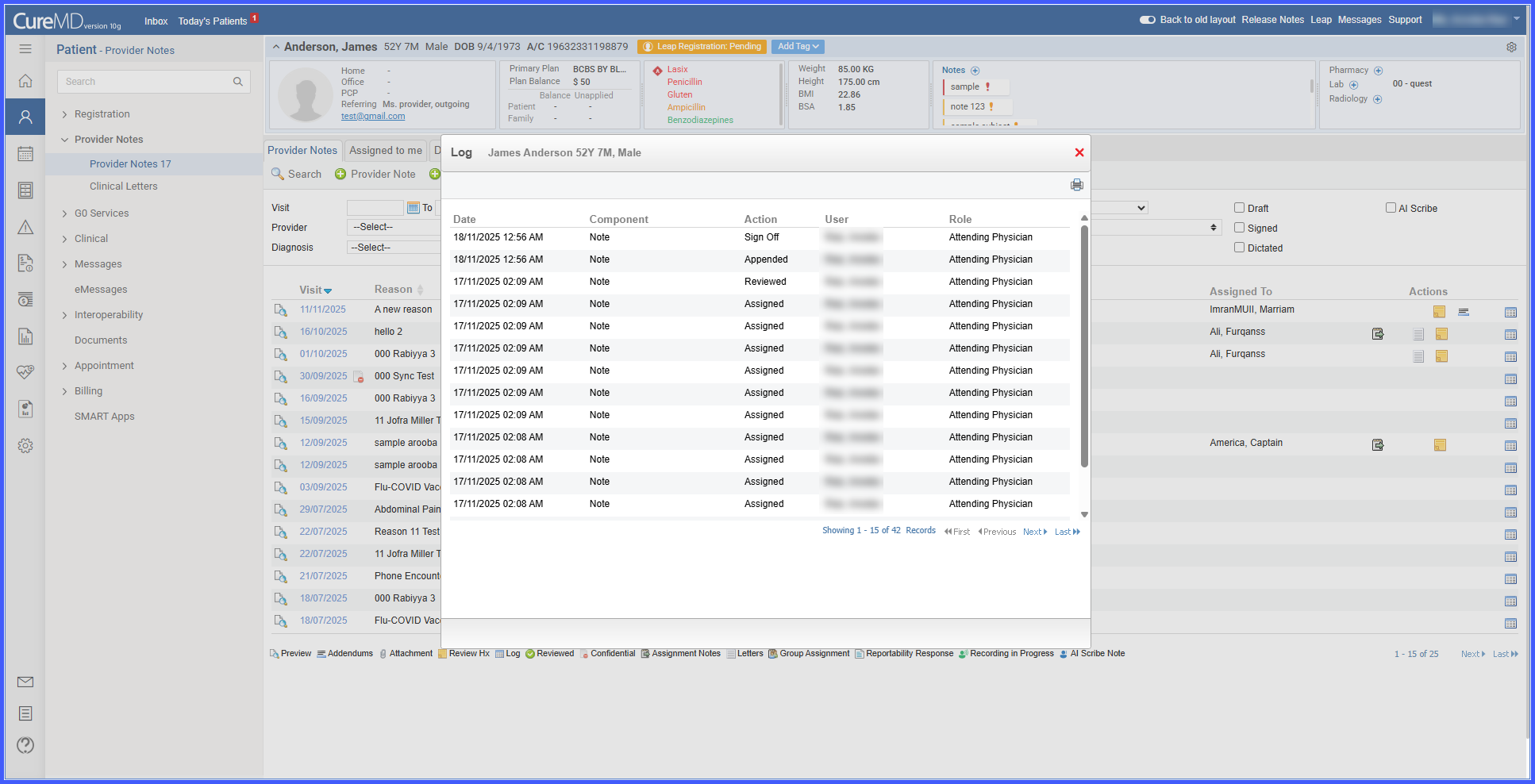
This enhancement restricts the Sign Off date picker in Provider Notes so that users cannot select a future date beyond the current day based on the practice’s local timezone. It ensures clinical documentation accuracy by preventing invalid date entries.
This enhancement provides a fallback option for label printing when the Cure Client software is not installed or running. Users can now manually generate labels, ensuring that patient workflows continue without interruption.
With this enhancement in the CureMD application, the user sees the Physical Exam template name displayed as the subheading in place of “Physical Exam” when a customized Physical Exam template is applied. This provides a more accurate reflection of the clinical content added to the note.