Sorted:

intg2

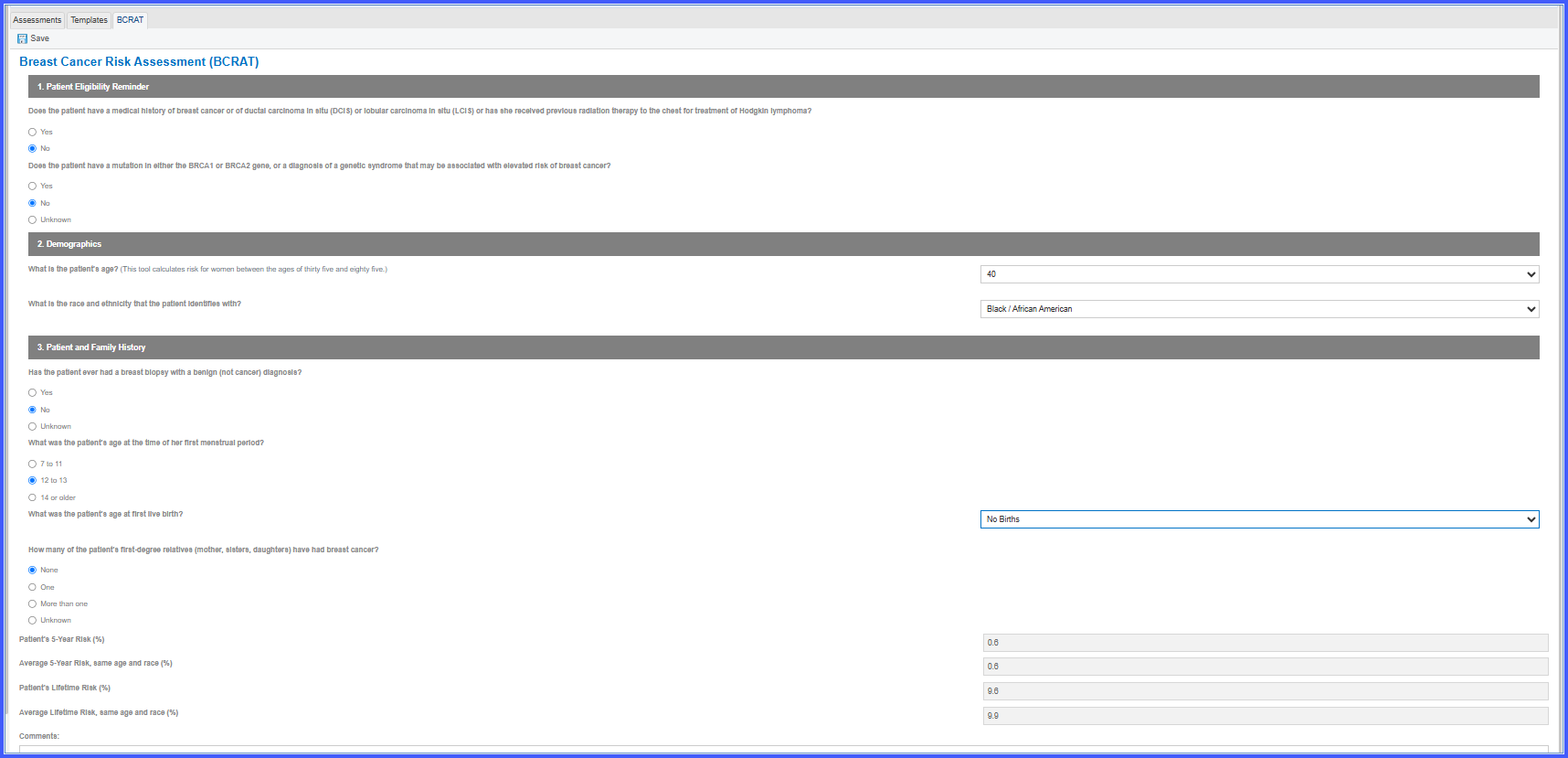
Breast Cancer Risk Assessment (BCRAT) Integration in 10G

This enhancement introduces the Breast Cancer Risk Assessment (BCRAT) form within the 10G Assessments module. Users can now perform standardized breast cancer risk assessments directly within CureMD, calculate 5-year and lifetime risk, and retain the assessment inputs and calculated results as part of the patient's clinical documentation.
chemo4

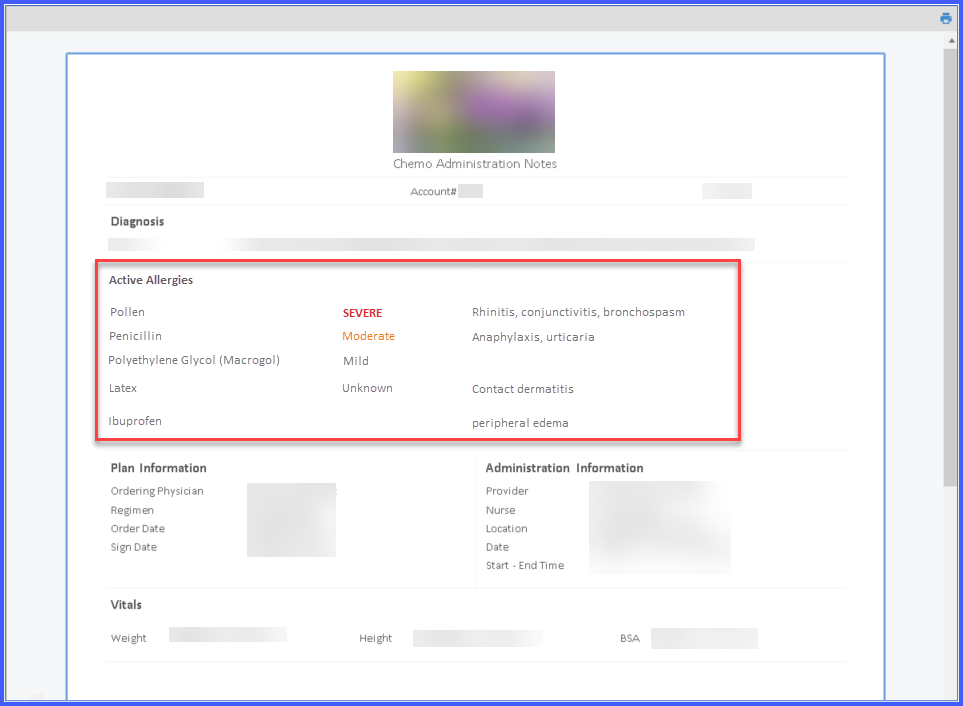
Active Patient Allergies Display Across Chemotherapy Workflows

This enhancement improves patient safety by making active allergy information readily visible across key Chemotherapy Manager workflows. Active allergies are now displayed in Chemo Plan Reports, Drug Administration Reports, Administration Notes, and the Patient Banner, allowing clinicians to review important allergy information without navigating to other areas of the patient chart.

Weight1

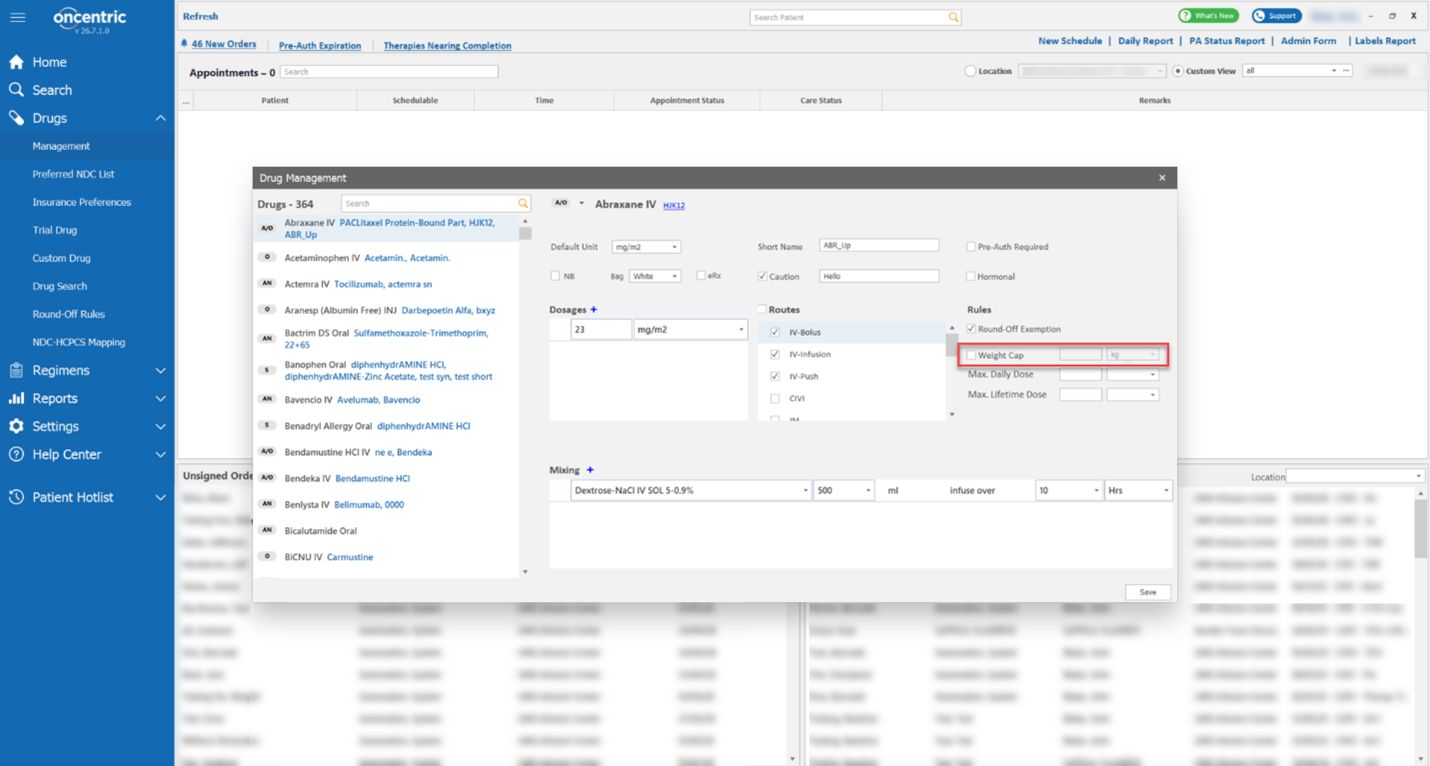
Configurable Weight Cap for Weight-Based Dosage Calculations Across Oncology Workflows

This enhancement introduces a configurable Weight Cap for eligible weight-based drugs, allowing practices to define a maximum weight used for dosage calculations. When a patient's recorded weight exceeds the configured threshold, the system automatically applies the capped weight during dose calculations and displays visual indicators throughout oncology workflows to identify capped dosing.

Drug1

Enhanced Drug Forecasting Report

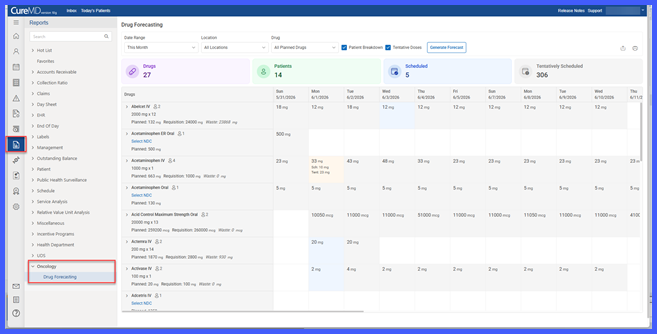
This enhancement introduces a redesigned Drug Forecasting Report that provides a more comprehensive view of upcoming medication requirements for oncology practices. The report includes enhanced forecasting, advanced filtering, patient-level details, improved NDC management, alternative drug selection, and expanded print and export capabilities to support inventory planning and reduce medication waste.

trial2-1

Enhanced Clinical Trials Research Module

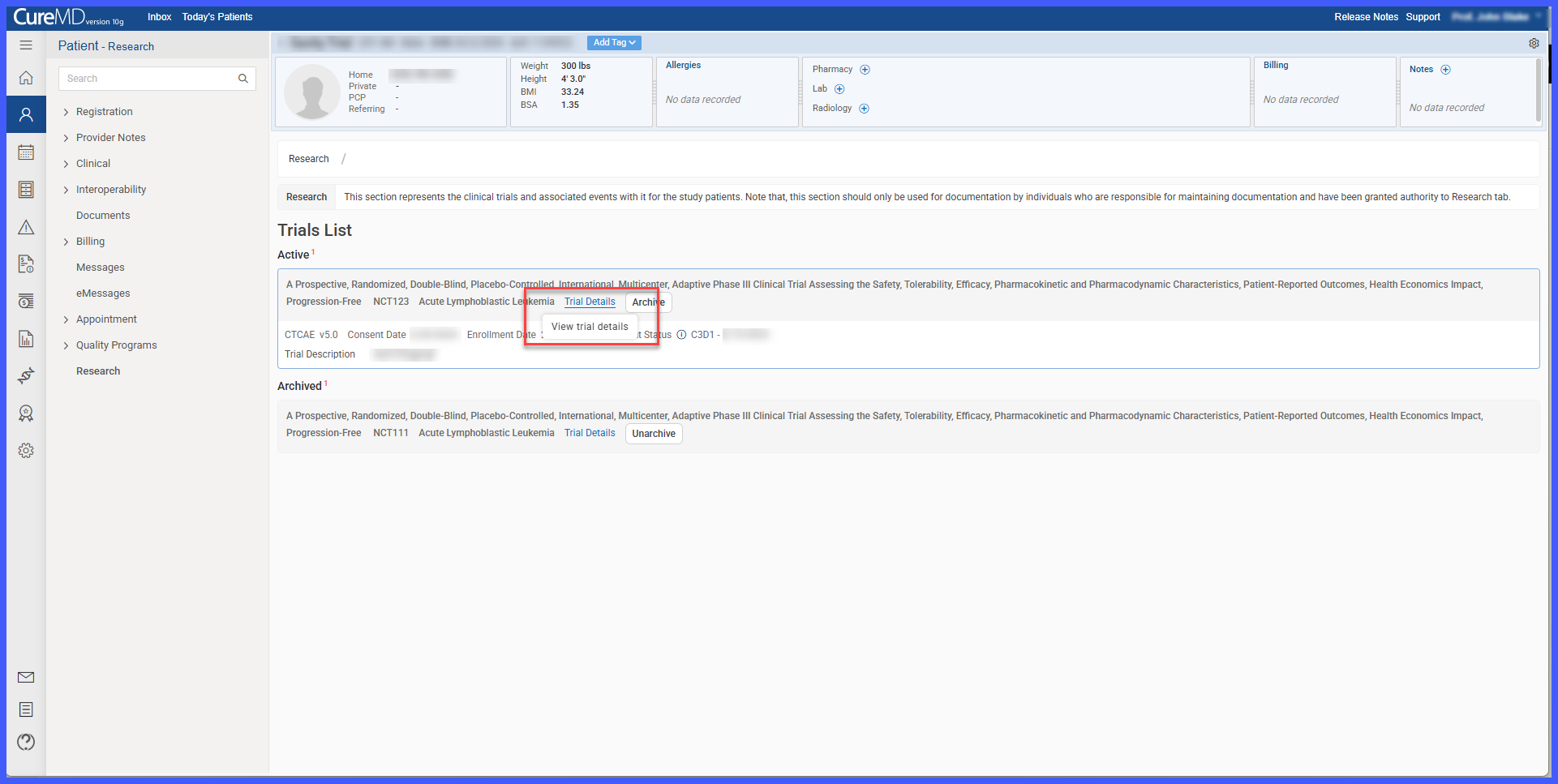
This enhancement significantly expands the Clinical Trials Research Module by providing a centralized workspace for managing research data, trial documentation, sign-off workflows, and consolidated reporting. The updated module introduces new research sections, streamlined trial summary creation, enhanced report management, and improved collaboration for clinical research teams.

Therapy1

Therapies Nearing Completion Report

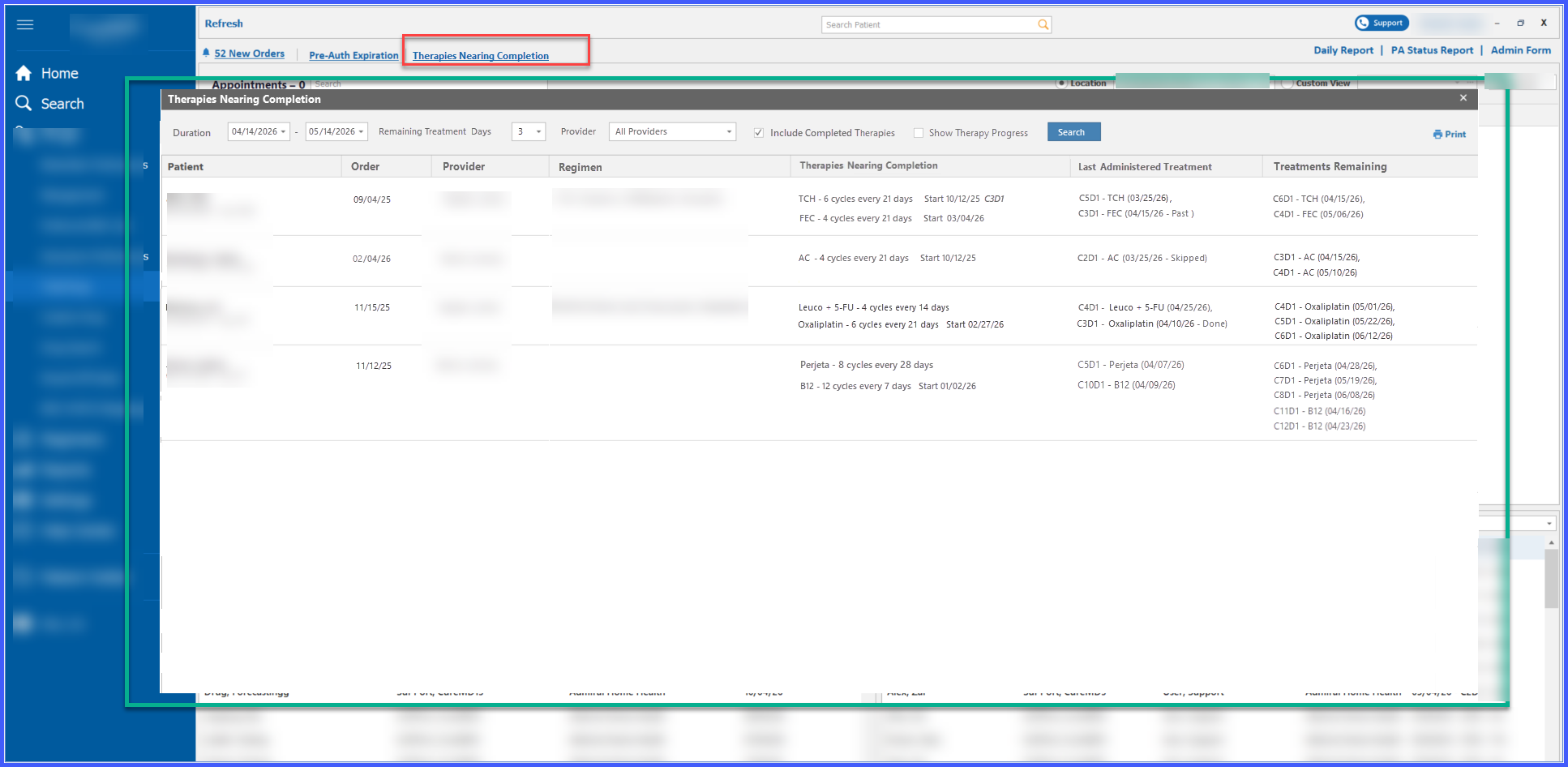
This enhancement introduces the Therapies Nearing Completion report within the Chemotherapy Manager Dashboard. The report enables practices to proactively identify patients whose chemotherapy therapies are approaching completion, helping providers review and extend treatment plans without relying on manual chart reviews.

REL-6-additional-note-image-1

Capture and Display Plan/Product Type from Eligibility on Charge Page

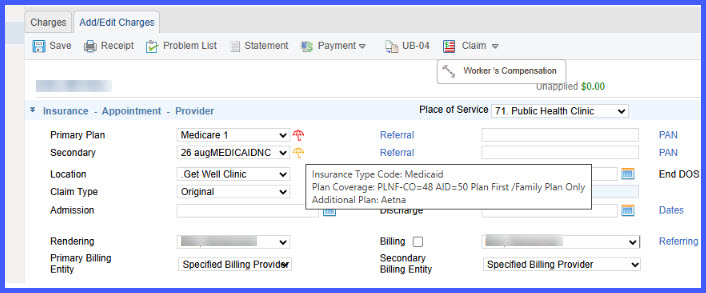
This enhancement captures and displays plan/product type information from eligibility responses directly on the Charge page. Plan Type (EB04) and Plan Description (EB05) are now stored at the charge level for the applicable Date of Service (DOS), providing greater visibility into insurance plan details and reducing the need for manual review of eligibility responses.

Drug1-1

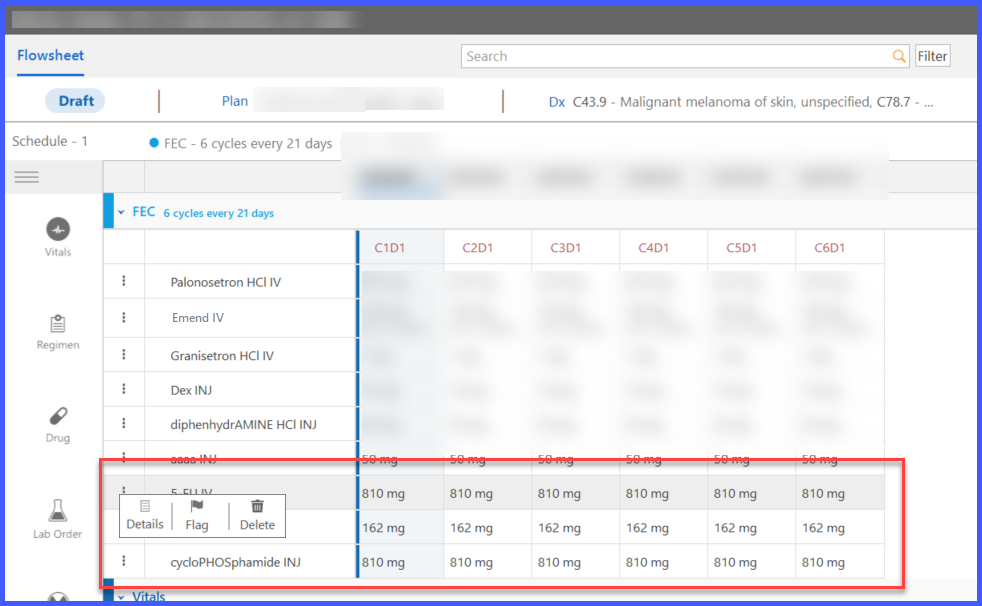
Drug Flagging Added to Treatment Flowsheet

This enhancement adds direct access to drug flagging functionality within the Treatment Flowsheet. Users can now apply drug-level flags without leaving the treatment workflow, improving efficiency when managing medications in the Chemotherapy Manager.

Revert

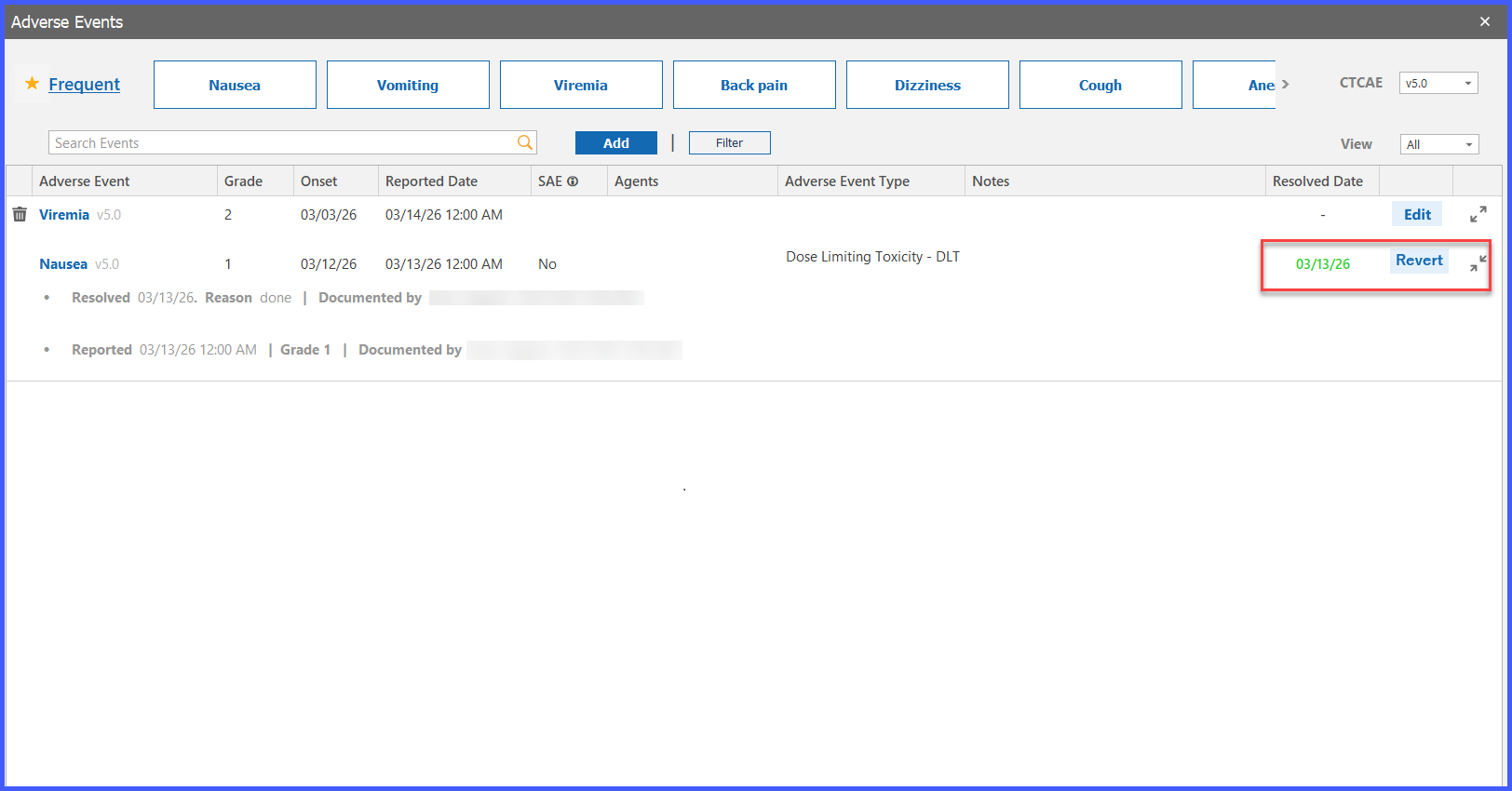
Revert Resolved Adverse Events to Active Status

This enhancement allows users to change a Resolved Adverse Event back to Active status when additional follow-up, updates, or ongoing monitoring is required. The feature restores editability while preserving key event information and maintaining accurate adverse event tracking.

SP1

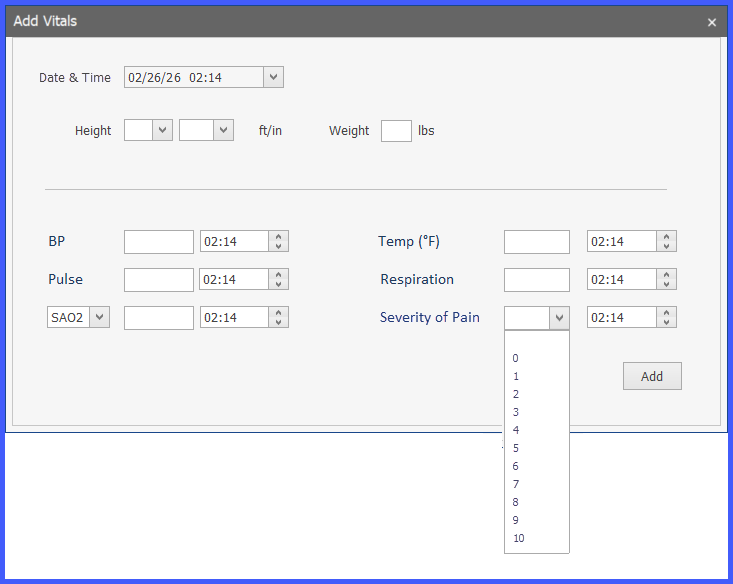
Severity of Pain Integration Across Oncology Documentation, Vitals, Administration, and Flowsheet Workflows

This enhancement introduces Severity of Pain as a standardized clinical data point across multiple oncology and patient care workflows. Users can now document, view, configure, report on, and incorporate patient pain assessments throughout vitals collection, administration workflows, flowsheets, provider notes, templates, and reports. These updates provide greater visibility into patient pain levels and support more comprehensive clinical documentation and monitoring.