Percentage of patients 18-75 years of age with diabetes and an active diagnosis of retinopathy in any part of the measurement period who had a retinal or dilated eye exam by an eye care professional during the measurement period or diabetics with no diagnosis or retinopathy in any part of the measurement period who had retinal or dilated eye exam by an eye care professional during the measurement period or in the 12 months prior to the measurement period.
– DENOMINATOR
Patients 18-75 years of age by the end of the measurement period with diabetes and a visit during the measurement period.
A qualifying visit in this case can include any of the following:
Office Visit
Annual Wellness Visit
Preventive Care Services Established Office Visit, 18 and Up
Preventive Care Services Initial Office Visit, 18 and Up
Home Healthcare Services
Ophthalmological Services
Telephone Visits
– NUMERATOR
Patients with an eye screening for diabetic retinal disease. This includes diabetics who had one of the following:
Diabetic with a diagnosis of retinopathy in any part of the measurement period and a retinal or dilated eye exam by an eye care professional in the measurement period.
Diabetic with no diagnosis of retinopathy in any part of the measurement period and a retinal or dilated eye exam by an eye care professional in the measurement period or the year prior to the measurement period.
– DENOMINATOR EXCLUSIONS
Patients in hospice care for any part of the measurement period.
Patients 66 and older by the measurement period who are living long term in a nursing home any time on or before the end of the measurement period.
Patients 66 and older by the end of the measurement period with an indication of frailty for any part of the measurement period who also meet any of the following advanced illness criteria:
Advanced illness with two outpatient encounters during the measurement period or the year prior.
Advanced illness with one inpatient encounter during the measurement period or the year prior.
Taking dementia medications during the measurement period or the year prior.
Patients receiving palliative care for any part of the measurement period.
– APPLICATION WORKFLOW
For Denominator:
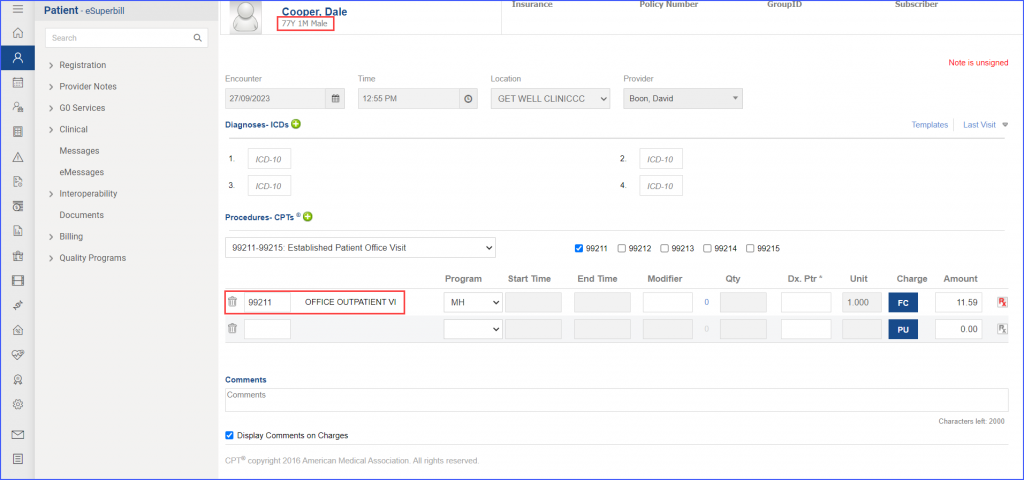
To record an encounter, navigate to Patient > Provider Notes > Create Superbill. Under the ‘Procedure-CPTs’ heading, enter the relevant encounter code.
eSuperbill
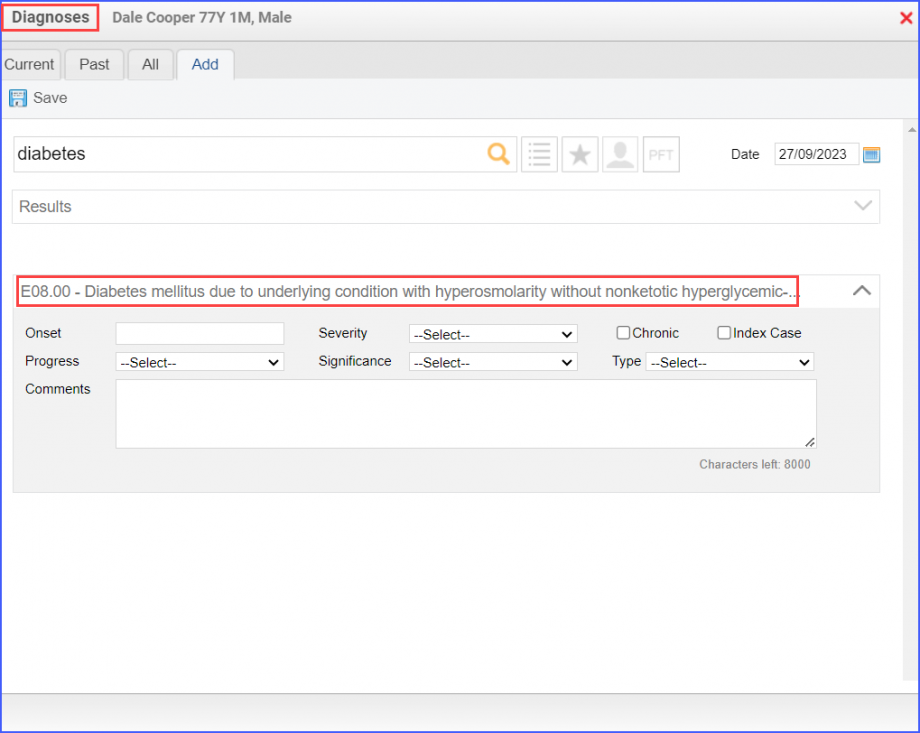
To record the diabetes diagnosis, use the workflow Patient > Provider Notes > Diagnoses, and click ‘Add’. Search for the diabetes diagnosis, add the diagnosis details. Then click ‘Save’.
Example of Diabetes Diagnosis
For Numerator:
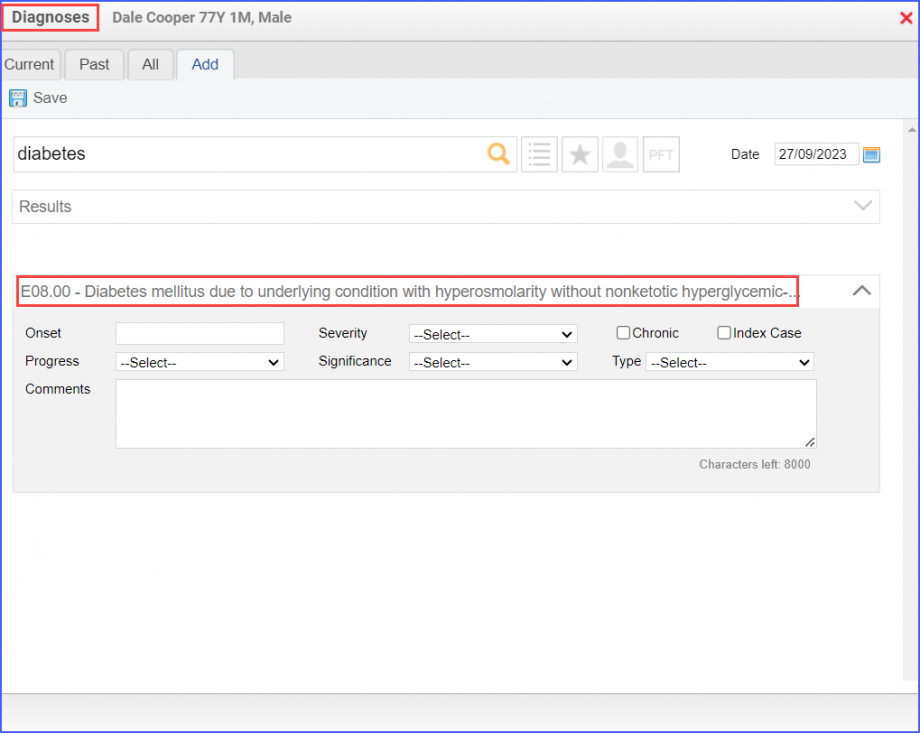
The diabetic retinopathy diagnosis can be recorded via Patient > Provider Notes > Diagnoses. Here, click ‘Add’, search for the diagnosis and add the diagnosis details. Once done, click ‘Save’.
Example of Diabetic Retinopathy Diagnosis
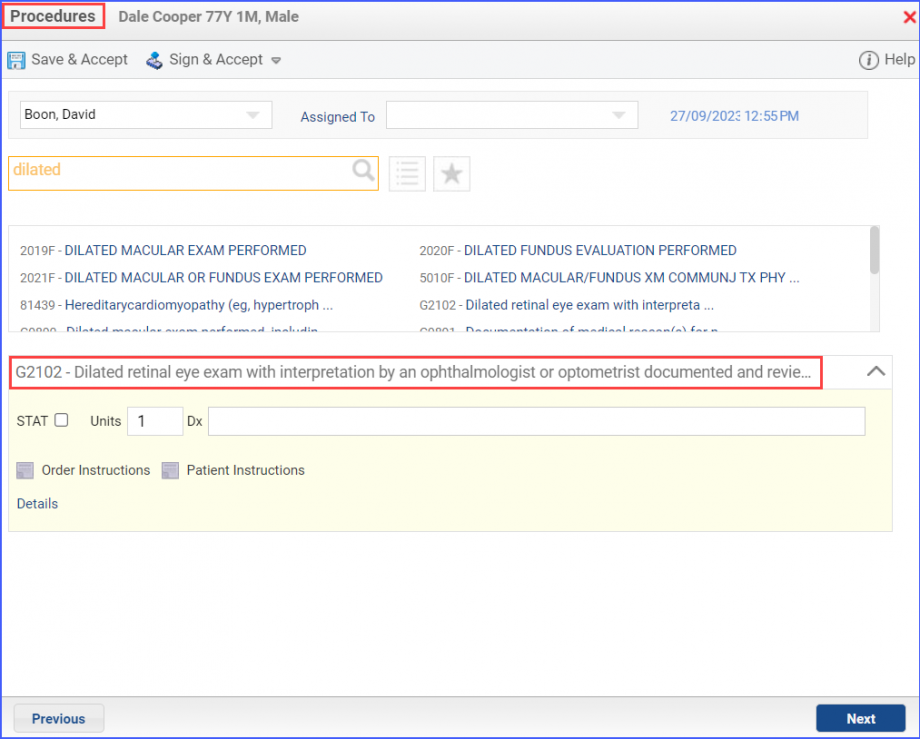
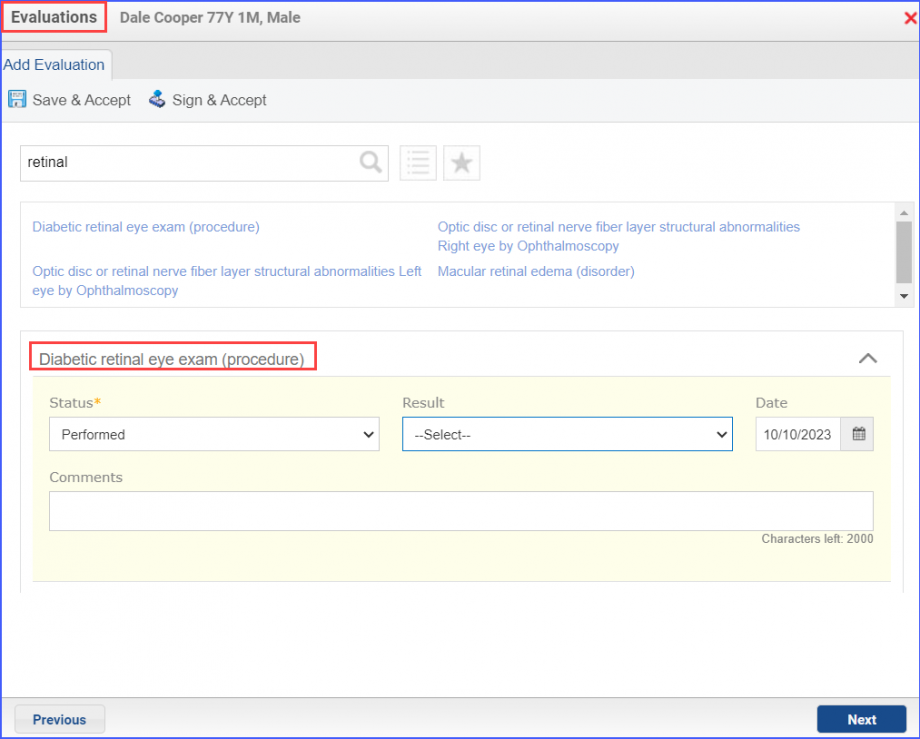
To document Retinal or Dilated eye exam, navigate to Patient > Provider Notes > Evaluations or to Patient > Provider Notes > Procedures and click ‘Add’. Search for the relevant exam procedure and fill out the details if necessary. Once done, click ‘Save’.
Example of Retinal Exam EvaluationExample of Retinal Exam Procedure
For Denominator Exclusions:
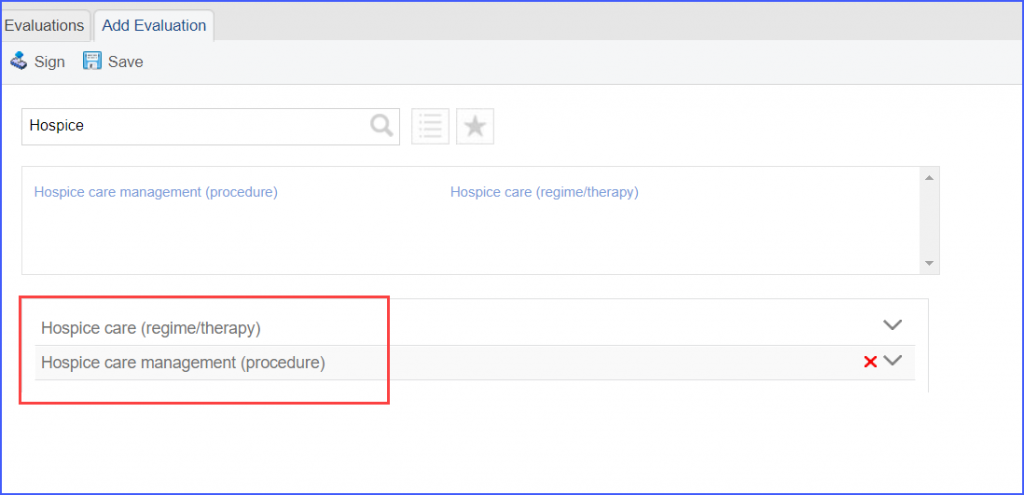
To document a patient receiving hospice care, navigate to Patient > Provider Notes > Evaluations. Hospice Care can also be recorded by the workflow Patient > Provider Notes > Create Superbill. Under the ‘Procedure-CPTs’ heading, add the relevant hospice care code.
Hospice Care Evaluation
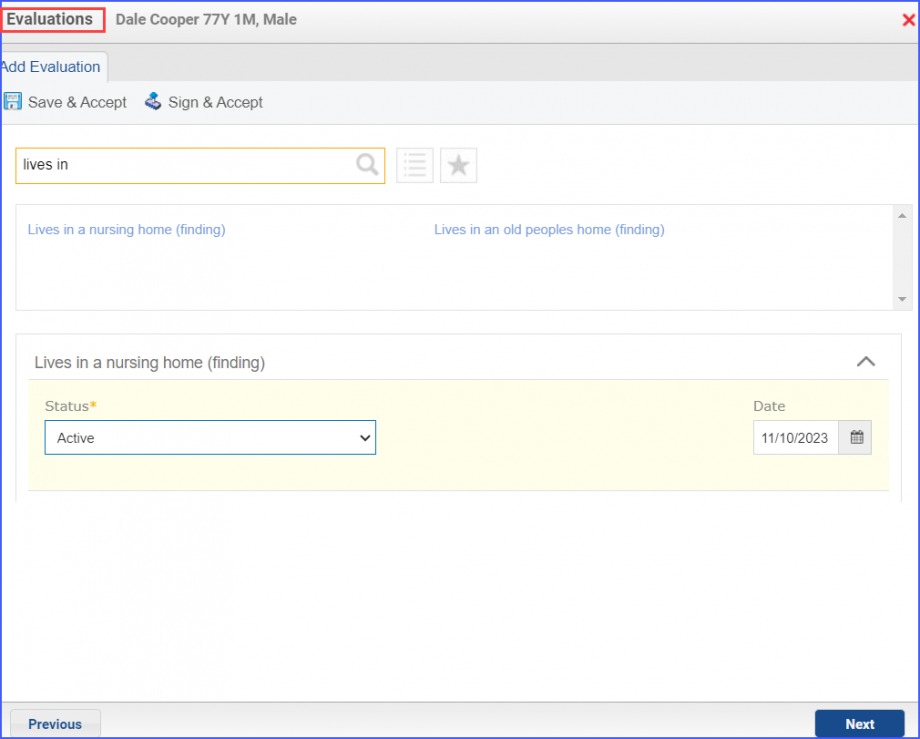
To record an encounter for patients living long term in nursing homes, navigate to Patient > Provider Note > Create Superbill or head over to Patient > Provider Notes > Evaluations. Here, click ‘Add’ and search for the relevant finding.
Nursing Home Evaluation
To document an outpatient encounter for advanced illness, navigate to Patient > Provider Notes > Create Superbill. These outpatient encounter can include any of the following:
Outpatient
Observation
Emergency Department Visit
Nonacute Inpatient
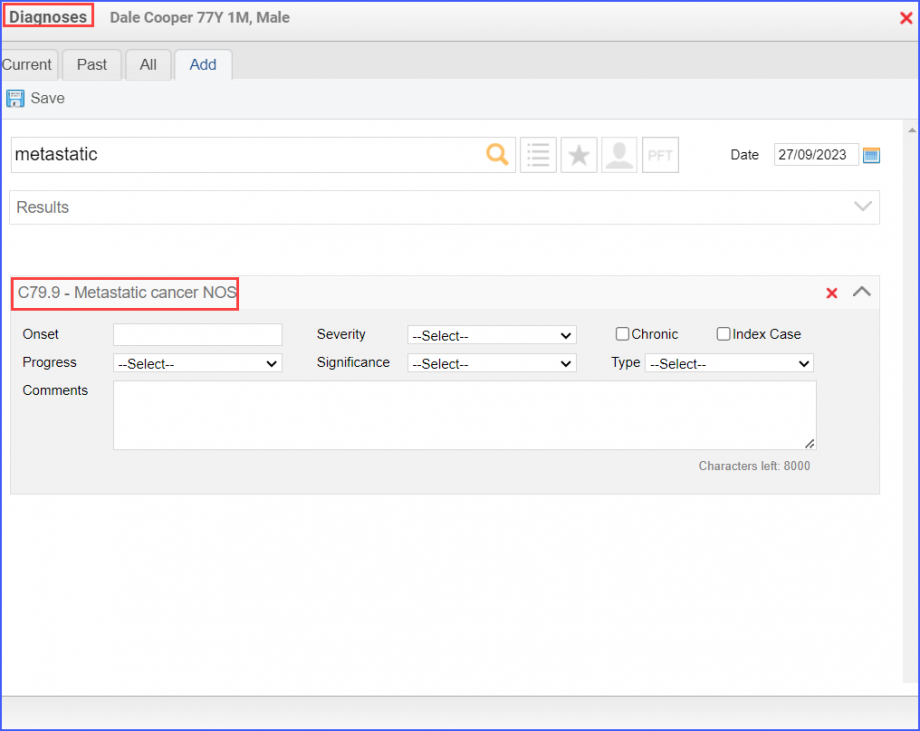
To document an advanced illness, use the workflow: Patient > Provider Notes > Diagnoses. Click ‘Add’ and search for the relevant advanced illness.
Note: The advanced illness is to be diagnosed during the outpatient encounter.
Example of Advanced Illness Diagnosis
To record frailty criteria, the following workflows can be used:
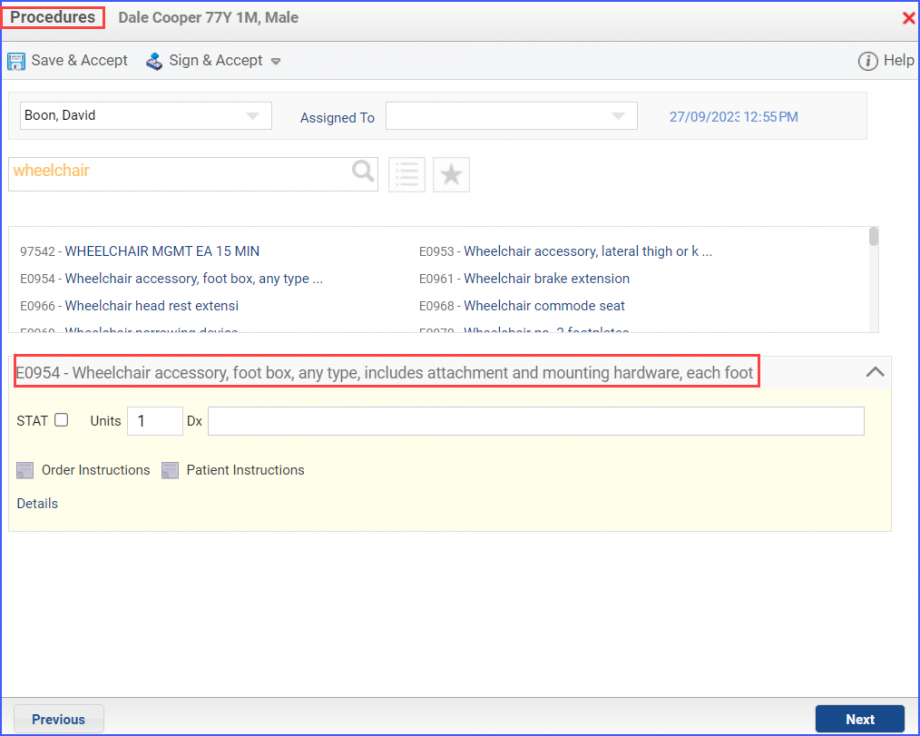
Frailty device ordered/ applied during the measurement period: Patient > Provider Notes > Procedures or through Patient > Provider Notes > Evaluations
Example of Frailty Device Ordered/Applied
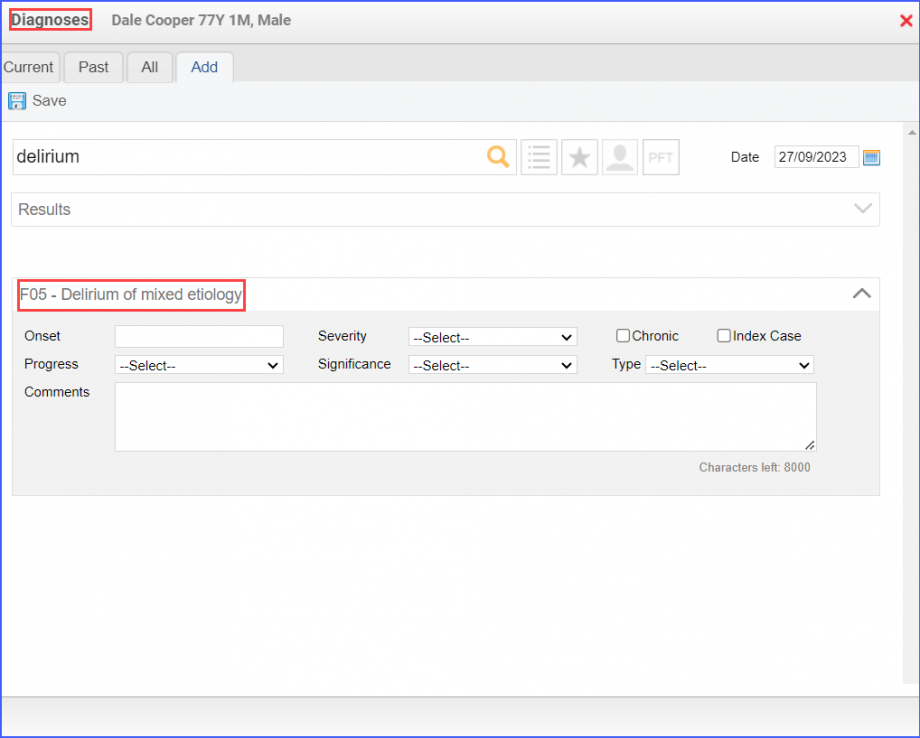
Frailty diagnosis during the measurement period: Patient > Provider Notes > Diagnoses.
Example of Frailty Diagnosis
Frailty symptoms during the measurement period: Patient > Provider Notes > Diagnoses or Patient > Provider Notes > Evaluations
Frailty encounter during the measurement period: Patient > Provider Notes > Create Superbill
To document an inpatient encounter for advanced illness, navigate to Patient > Provider Notes > Create Superbill or document via Patient > Provider Notes > Evaluations.
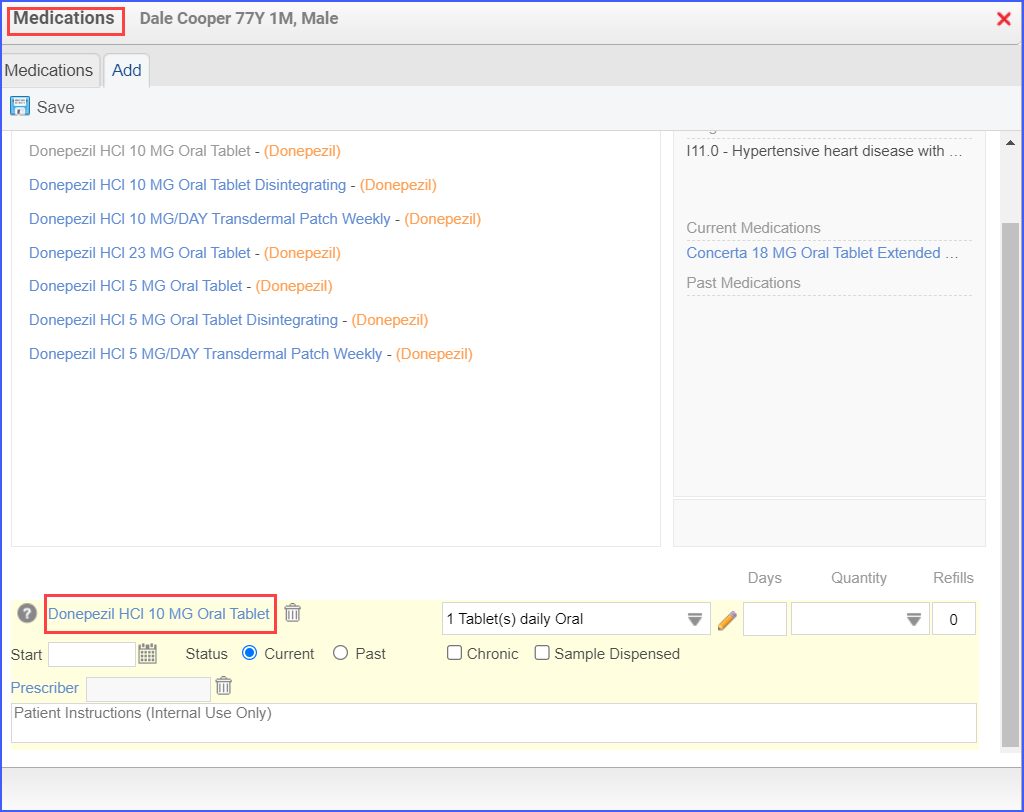
The dementia medication cam be documented via Patient > Provider Notes > Medications.
Example of Dementia Medication
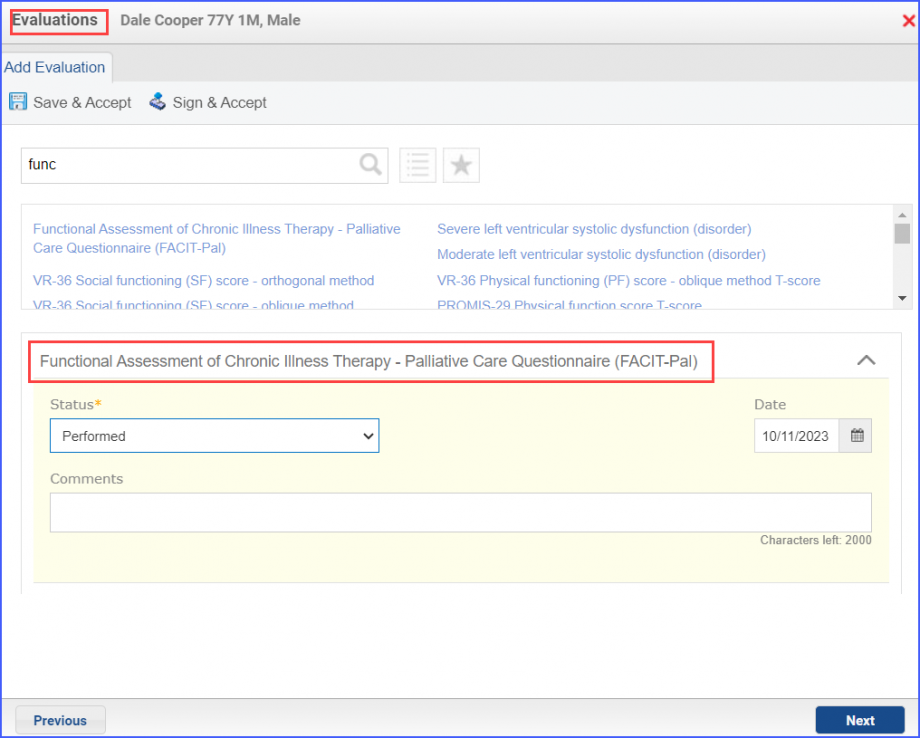
To record palliative assessment performed, navigate to Patient > Provider Notes > Evaluations or head over to Patient > Provider Notes > Assessments.
Example of Palliative Assessment
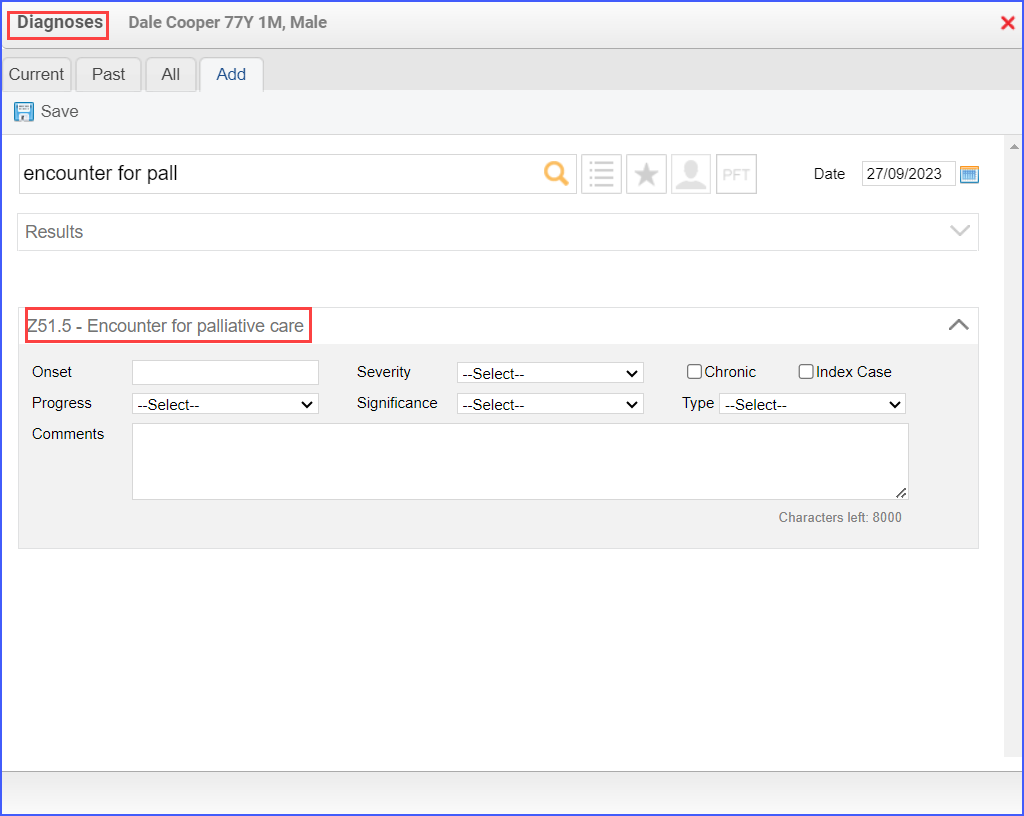
To record palliative encounter, navigate to Patient > Provider Notes > Create Superbill or use the workflow Patient > Provider Notes > Diagnoses. Here, document a diagnosis for ‘Encounter for palliative care’.
Example of Palliative Encounter
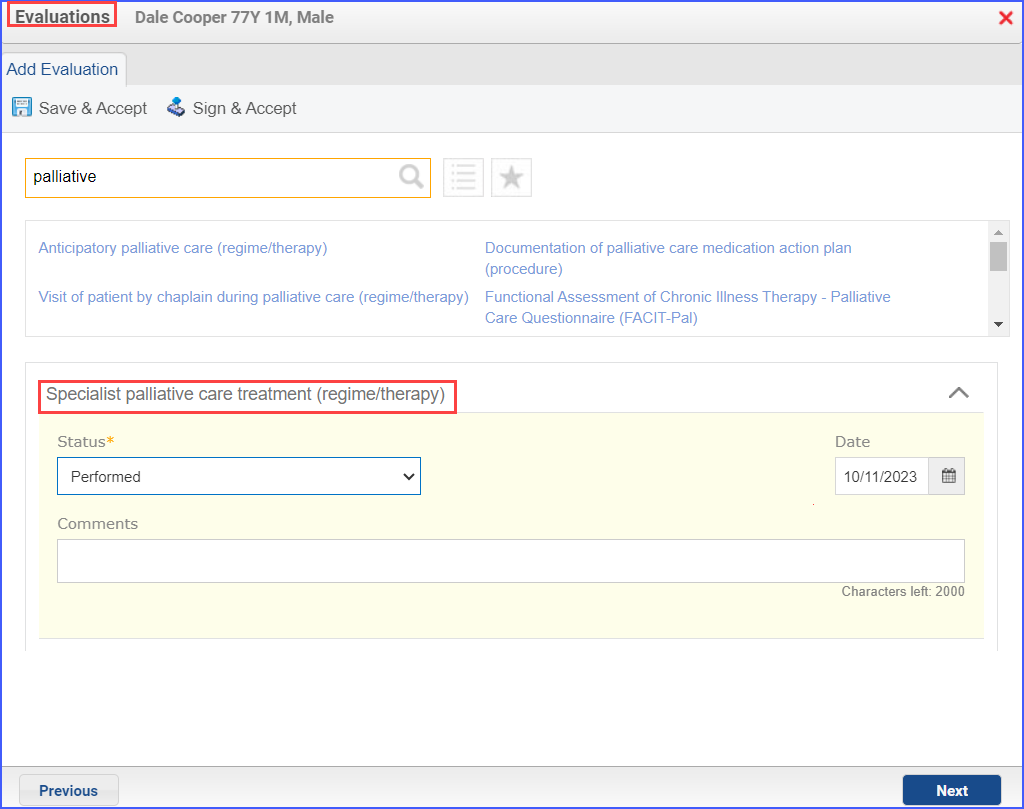
To document a palliative intervention performed, navigate to Patient > Provider Notes > Evaluations.