EPDS and EPDS-3 Behavioral Assessments with Standardized LOINC Coding
What’s New
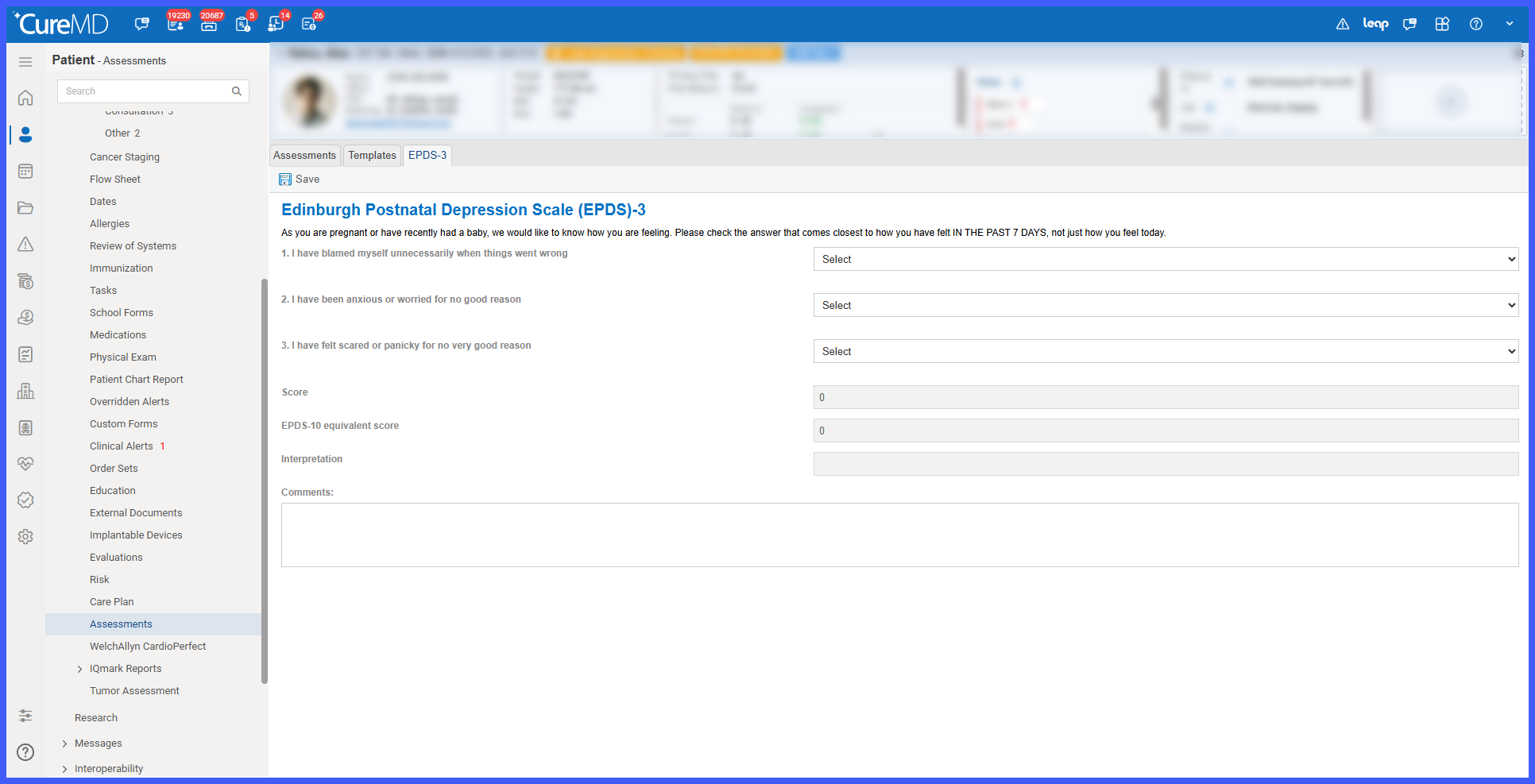
- Added EPDS-3 as a Behavioral Assessment in 10G.
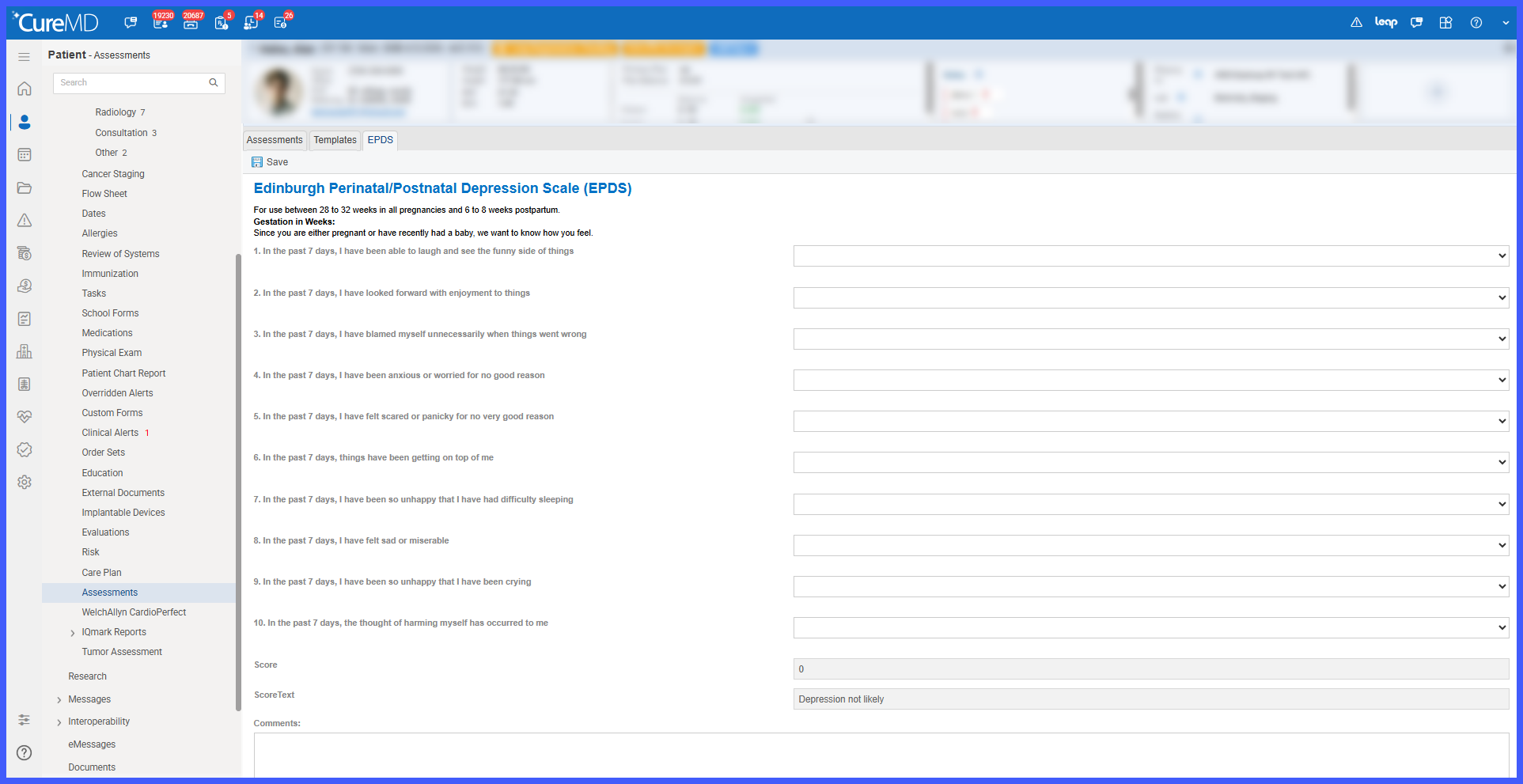
- Standardized the existing full EPDS (EPDS-10) using LOINC coding.
- EPDS and EPDS-3 questions are mapped to their applicable LOINC question codes.
- Supported responses are mapped to standardized LOINC Answer (LA) codes.
- Assessment responses use the applicable 0–3 ordinal scoring rules.
- EPDS-3 automatically calculates a total score ranging from 0–9.
- EPDS-3 provides configured score interpretations:
– 0–2: Below configured possible-depression threshold
– 3 or greater: Possible depression
– 6 or greater: Higher probability
- The system derives a configured EPDS-10 equivalent score from the EPDS-3 result.
- The full EPDS assessment is mapped to LOINC 71354-5.
- The full EPDS total score is mapped to LOINC 99046-5.
- Completed assessments retain structured responses, answer codes, calculated scores, and interpretations.
- Free-text and uncoded responses are not supported for EPDS or EPDS-3.
How It Works
- Open the applicable Behavioral Assessment workflow.
- Select EPDS or EPDS-3.
- Complete the assessment using the available standardized answer options.
- The system applies the configured ordinal scoring rules to the selected responses.
- For EPDS-3, the system calculates a total score between 0 and 9 and displays the applicable interpretation.
- The configured EPDS-10 equivalent score is also derived from the EPDS-3 result.
- Save the assessment to retain the structured question responses, LOINC Answer codes, calculated score, and interpretation.
 Benefits
- Provides standardized EPDS and EPDS-3 depression screening within CureMD.
- Eliminates manual scoring by automatically calculating assessment results.
- Provides configured interpretation of EPDS-3 scores to support clinical review.
- Uses standardized LOINC question and answer coding for structured data capture.
- Improves consistency of assessment information across reporting and interoperability workflows.
- Makes structured assessment results available to applicable downstream workflows.
- Reduces reliance on free-text responses through standardized coded selections.
