Location-Based Access Restriction for Patient Demographics from Scheduler
Authorized Patient Access
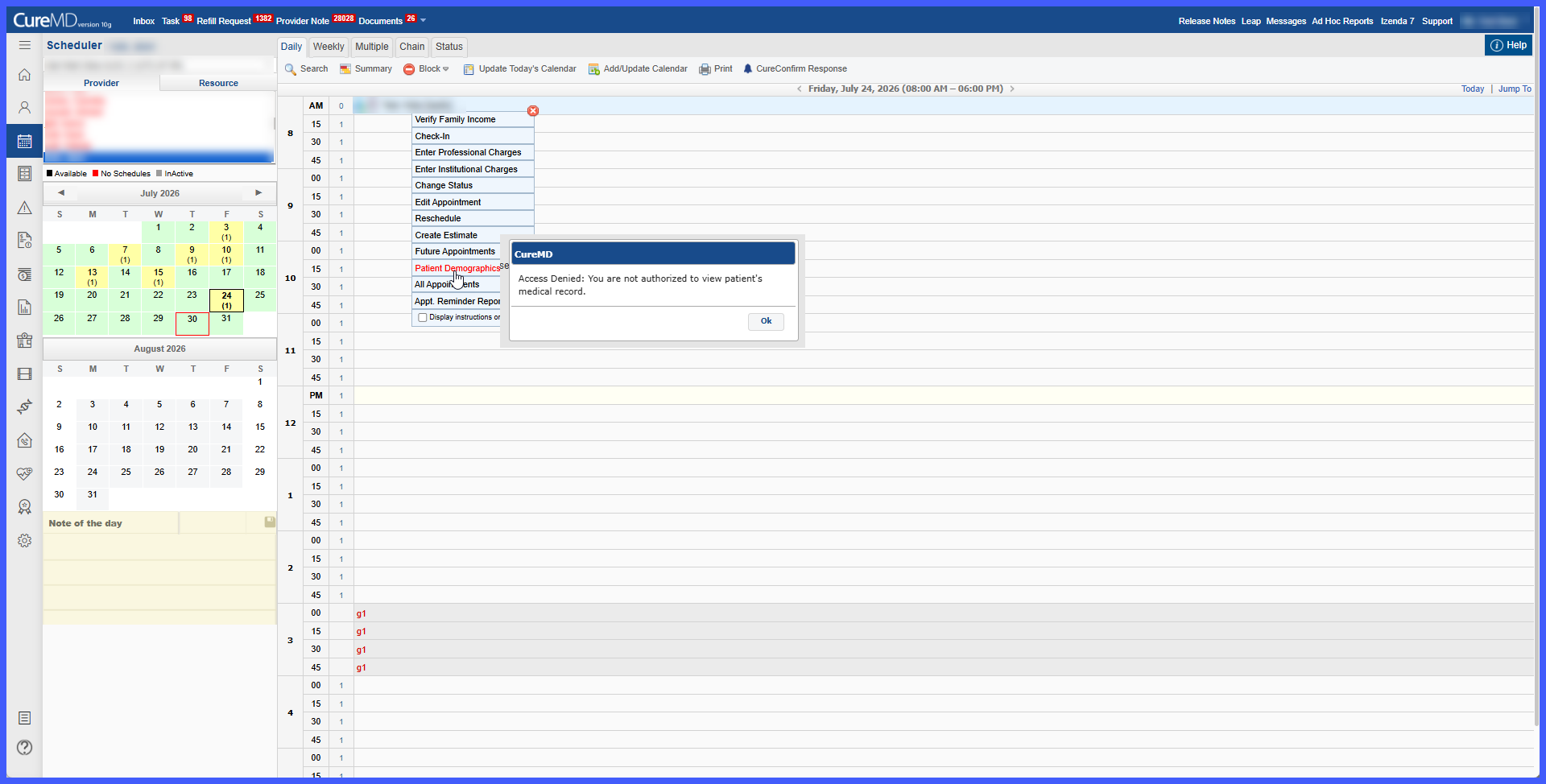
Restricted Patient Access
What’s New
- Location-based access restrictions are now enforced when navigating from the Scheduler to Patient Demographics.
- The system evaluates the patient’s location against the user’s assigned or authorized location access.
- Patients can remain visible within the Scheduler even when their Demographics are restricted.
- If the patient belongs to a location outside the user’s authorized access, Patient Demographics cannot be opened.
- An access denied prompt informs the user that access is restricted based on location.
- Dismissing the prompt returns the user to the Scheduler.
- Dismissing the prompt does not provide temporary access to the restricted patient record.
- Demographics remain inaccessible until the applicable location-access requirements are satisfied.
How It Works
- Access the Scheduler and locate the applicable patient.
- The patient remains visible within the Scheduler according to the existing scheduling workflow.
- Attempt to open the patient’s Demographics.
- The system evaluates the patient’s location against the user’s authorized location access.
- If the user is authorized for the patient’s location, the existing Patient Demographics workflow continues normally.
- If the patient belongs to a location outside the user’s authorized access, the system blocks access and displays an access denied prompt.
- Dismiss the prompt to return to the Scheduler. The patient’s Demographics remain restricted.
 Benefits
- Prevents unauthorized access to patient demographic information across locations.
- Extends location-based access controls to the Scheduler-to-Demographics workflow.
- Allows staff to continue applicable scheduling activities without exposing restricted demographic information.
- Clearly informs users when access is denied due to location restrictions.
- Helps practices maintain appropriate location-based boundaries for patient information.
- Supports privacy and access-control requirements without changing existing patient or user location assignments.
