Enhanced Permission Rules for Deleting Provider Notes
What’s New
-
Provider note deletion now evaluates billing and statement status in addition to user delete permissions.
-
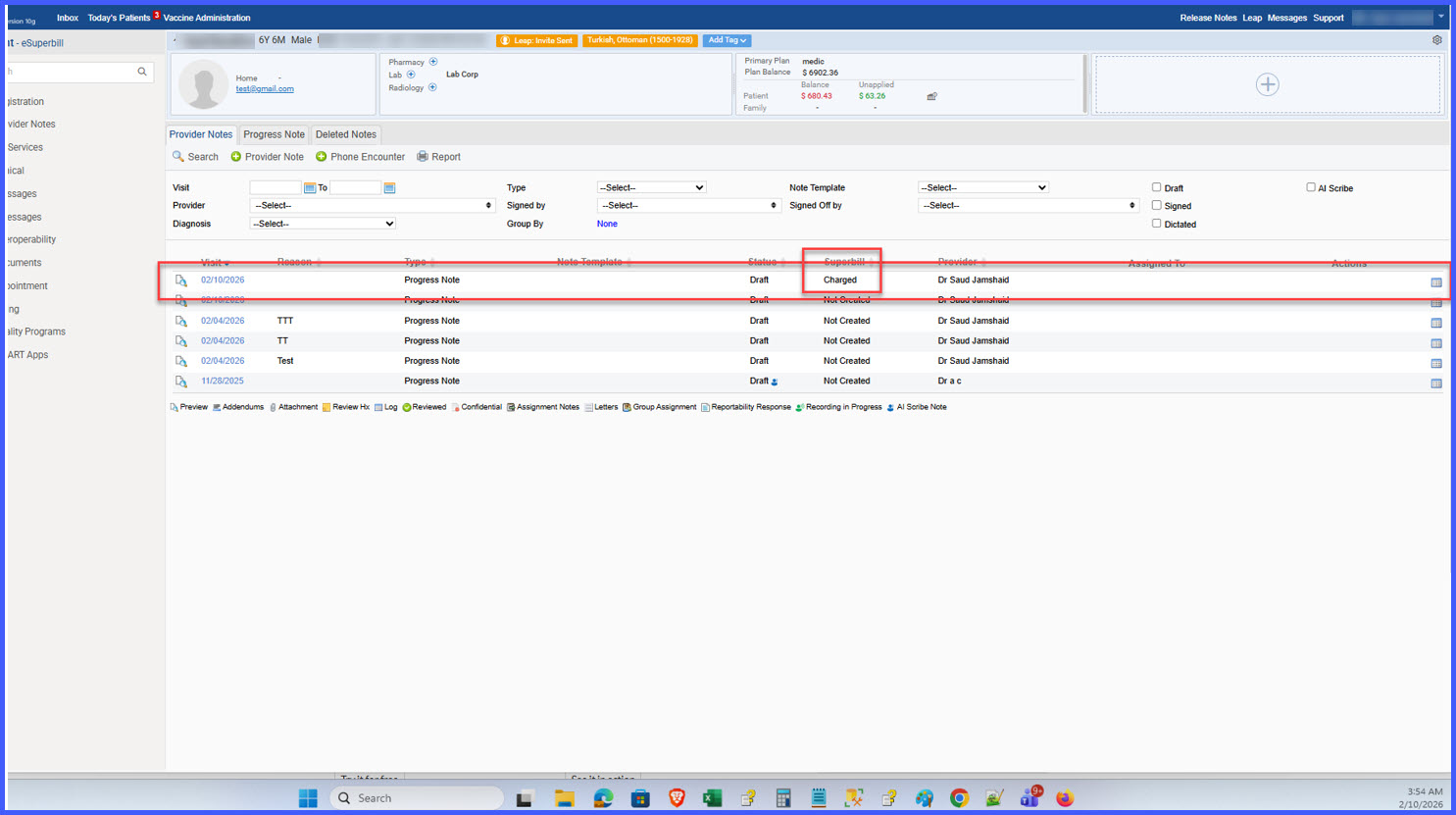
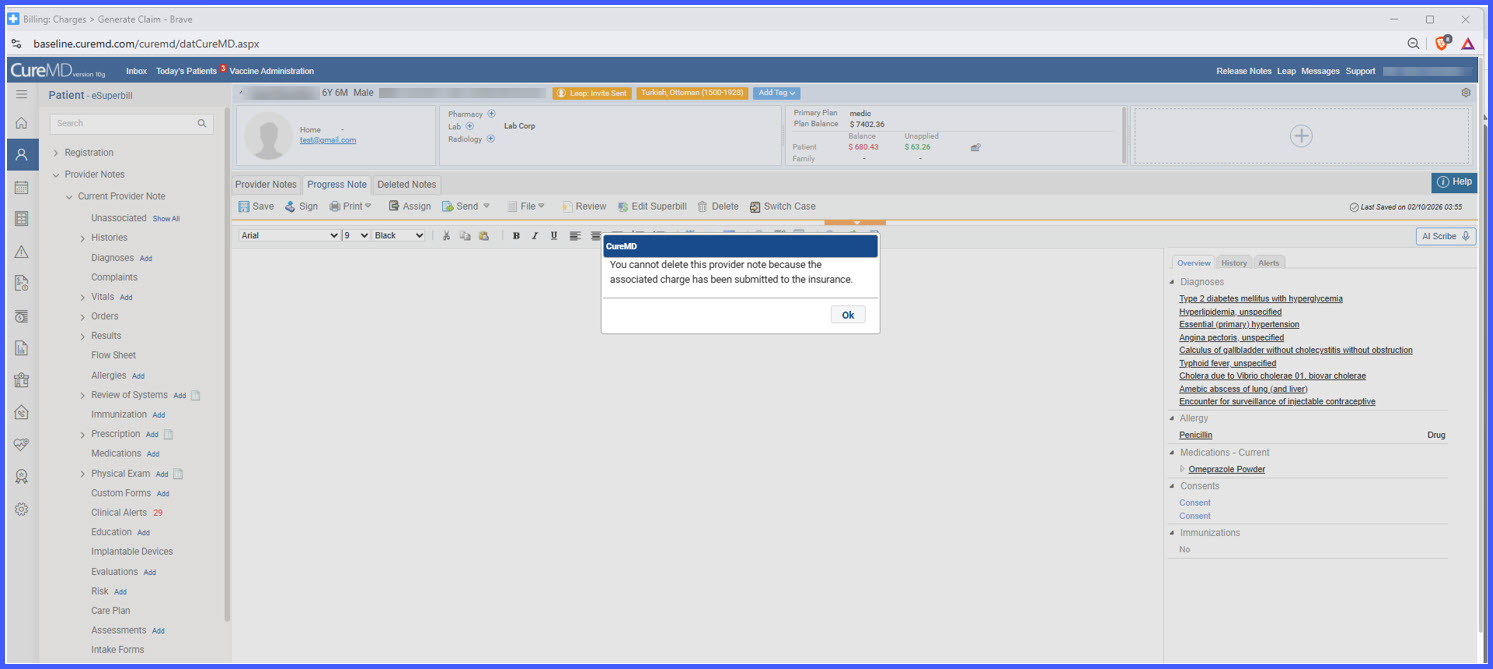
Deletion is blocked when an associated charge has been submitted to insurance.
-
Deletion is allowed when a charge exists but has not been submitted to insurance.
-
Deletion is blocked for self-pay charges when a patient statement has been sent.
-
Deletion is allowed for self-pay charges with an open balance when no statement has been sent.
-
Informational pop-up messages explain why deletion is restricted when applicable.
How It Works
-
A user with delete permissions opens a provider note for editing.
-
When the user attempts to delete the note, the system evaluates associated billing data.
-
The system applies the following rules:
-
If a charge has been submitted to insurance, deletion is not allowed.
-
If a charge exists but has not been submitted, deletion is allowed.
-
If a self-pay statement has been sent to the patient, deletion is not allowed.
-
If a self-pay charge exists with an open balance and no statement has been sent, deletion is allowed.
-
-
If deletion is blocked, a pop-up message appears explaining the specific reason based on charge or statement status.
-
If deletion is allowed, the provider note is deleted according to existing delete behavior.
Functionality
-
Permission-Based Deletion:
-
Only users with appropriate delete permissions can attempt to delete provider notes.
-
-
Conditional Deletion Logic:
-
The system checks insurance submission status, patient statement status, and self-pay balances before allowing deletion.
-
-
Popup Alerts:
-
Clear, contextual messages inform users why a note cannot be deleted when restrictions apply.
-
-
Impact and Restore Review:
-
Deletion behavior aligns with existing restore and audit requirements to maintain data integrity across clinical and billing records.
-
Benefits
-
Prevents accidental deletion of provider notes tied to insurance or patient billing workflows.
-
Preserves data integrity between clinical documentation and financial records.
-
Reduces billing discrepancies and compliance risks.
-
Improves user understanding through clear, actionable system feedback.
-
Ensures safer, more controlled management of provider notes.